
You Have Time to Meditate
Especially on the days that feel full.
Meditation is often seen as something we’ll get to when life slows down — when the house is quieter, when there’s more time, when we feel more “ready.” But meditation isn’t about creating the perfect conditions. It’s simply the practice of paying gentle attention to the present moment — even for a few minutes at a time.
You don’t need a quiet mind to meditate.
You meditate to support the mind in learning how to soften.
Research from organisations such as the Black Dog Institute and Beyond Blue here in Australia shows that mindfulness-based meditation can help reduce stress, support emotional steadiness, and calm the nervous system. These effects don’t require long sessions — they develop through small, consistent moments of awareness.
Which means you have time for this.

What Meditation Actually Is
Meditation is the practice of noticing:
Your breath
Your senses
Your thoughts and feelings as they come and go
The mind will wander — this is normal and expected.
The practice is simply recognising that, and gently returning your attention.
This “returning” is where the nervous system learns to soften.
That’s where the groundedness lives.
Why 5 Minutes Is Enough
Research from Harvard Medical School and the Australian Psychological Society shows that even short periods of mindful breathing activate the parasympathetic nervous system — the part of the body that supports rest, recovery, and emotional regulation.
In just five minutes, your breath can slow, the body can release tension, and your inner world can settle — even slightly.
And even slightly can change the tone of your whole day.
Programs like Smiling Mind — developed here in Australia and used widely in schools, workplaces, and healthcare — emphasise short, consistent practice over long sessions.
Small moments, repeated gently, are powerful.
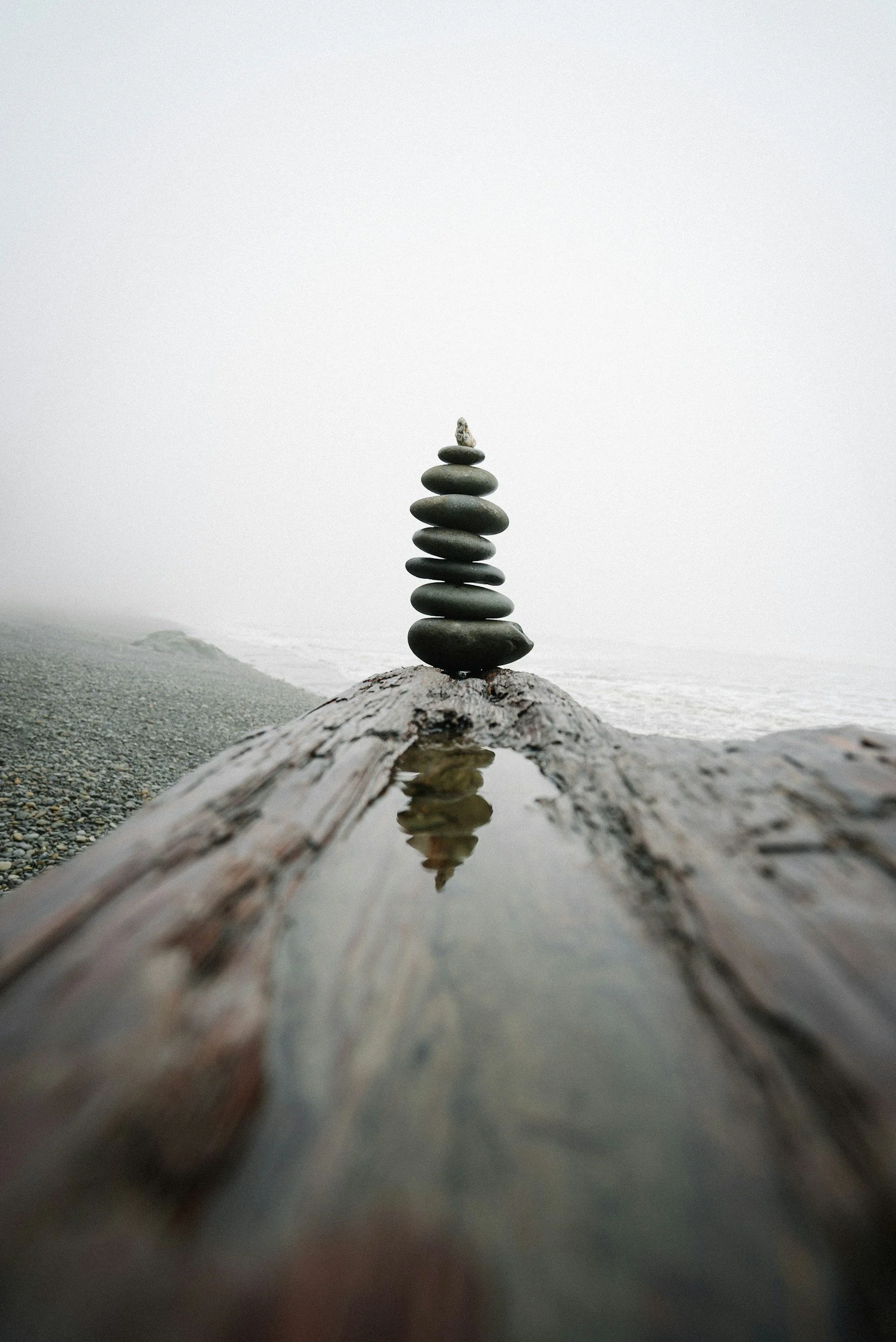
A 5-Minute Sensory Meditation to Try Today
You don’t need to sit cross-legged or silent.
You don’t need special equipment or a quiet house.
If you can, simply step outside.
Onto your deck, into your garden, onto the grass, or just to the doorway.
If that isn’t practical, sit near a window and soften your gaze outward.
Then, move through your senses slowly:
1. Seeing
Notice colour, light, shadow, and shape.
Gently attend to one thing at a time — pausing with it for a moment, and then letting it soften as you shift to the next.
2. Hearing
Notice sounds close by… then sounds further away.
Allow sound to come to you, rather than going to meet it.
3. Feeling
Feel the temperature of the air, your feet on the ground, your shoulders consciously loosening.
4. Smelling
Notice the scent of the morning air, soil, sunlight on leaves, or simply the familiar scent of home.
5. Breathing
Observe the gentle rise and fall of your breath. No need to change it.
Stay with this for five minutes — or however long feels supportive.
This is meditation.
Grounded. Accessible. Realistic.
A gentle return to yourself.
If You Don’t Feel Confident Yet
You might think:
“My mind is too busy.”
“I can’t stop thinking.”
“I don’t know how to meditate properly.”
These are the most common experiences I hear — truly.
Meditation isn’t about having no thoughts.
It’s about recognising your thoughts without getting swept away by them.
The gentle return is the practice.
Every return is enough.